
 Authorized Dealer
One team for the court and the ground beneath it. Our family-owned team plans drainage into every court—and helps solve existing water problems around courts and yards, from grading and base preparation to French drains and suitable drainage tie-ins.
We make sure your court is designed right!
A court is more than the surface you play on. Its pitch, stone base and surrounding landscape all affect where water goes. We plan those pieces together, rather than treating drainage as an afterthought.
For New Jersey homeowners, HOAs and clubs, that means a coordinated conversation about the court, the yard and the house. We look for practical ways to move water away from structures and playing areas without creating a problem for neighboring properties.
We review site elevations and plan the court and surrounding grades to direct runoff away from the house where feasible, while respecting the playing surface requirements and the property’s drainage constraints.
Base preparation and compaction support the playing surface. Where needed, perforated drain pipe within stone trenches or French drains help collect and convey subsurface water. Pipe, stone, filter materials and installation details are selected for site conditions.
We consider how runoff will be collected and where it can responsibly discharge. Tie-ins to an existing system require a suitable connection, capacity and any applicable approvals—not just a pipe leading off the court.
Standing water near the court, washed-out edges, soggy lawn areas and runoff toward the house deserve a closer look. We assess the source before recommending regrading, collection drains, French drains or improvements to existing drainage.
We also look at the condition of the court base. If water and movement have contributed to structural failure, total court reconstruction may make more sense than resurfacing. We explain the options and define the scope before work starts.
Discuss when and where water collects. Review court and yard conditions, elevations, access and the existing drainage system.
Identify grading improvements and suitable collection and discharge options. Discuss utility locations, local requirements and any specialist design or approvals needed.
Complete the agreed excavation, grading and base work. Install specified drains, stone and connections where called for in the plan.
Review the completed work and care needs, including keeping drain inlets and outlets clear. Confirm how the drainage plan fits the court and surrounding yard.
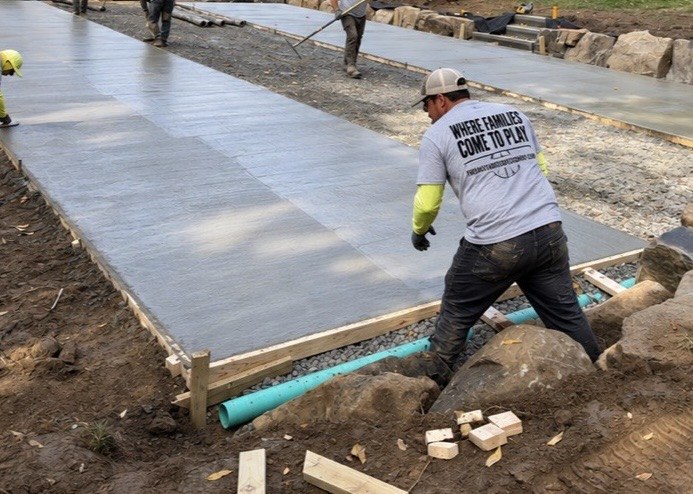
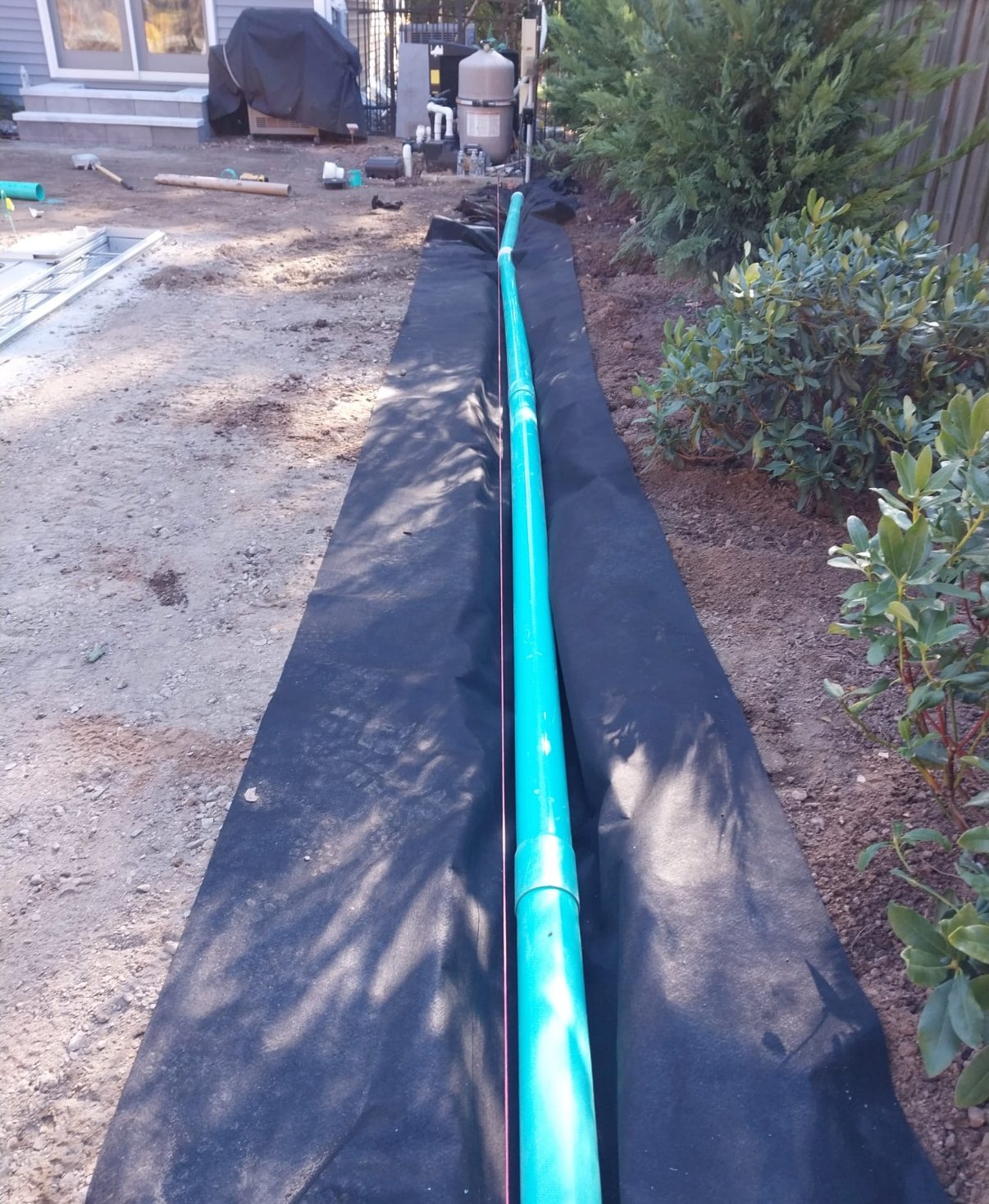
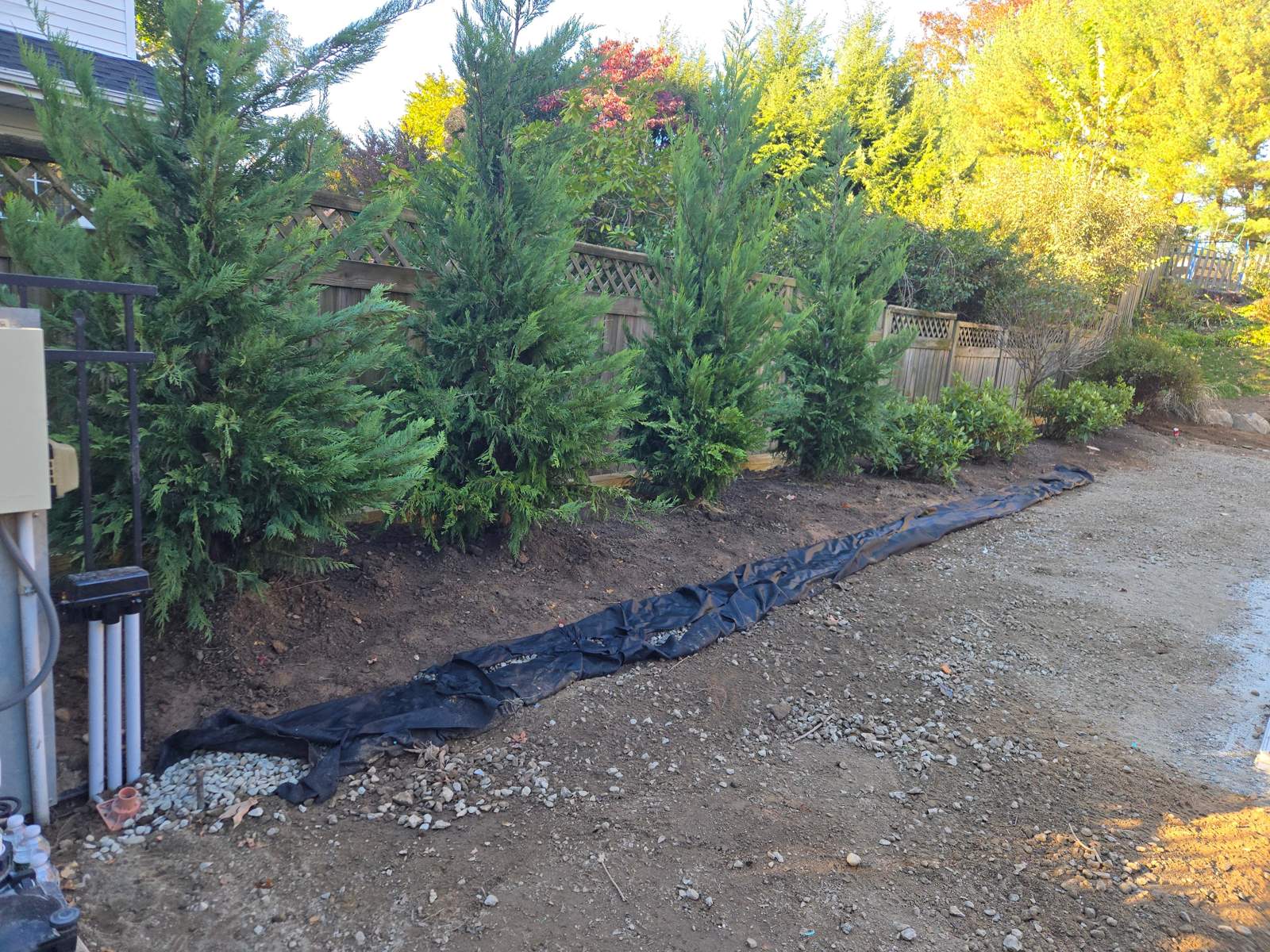
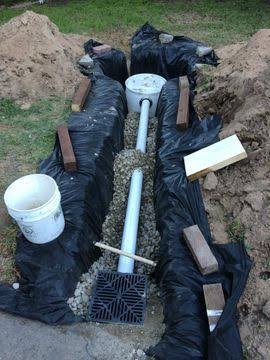
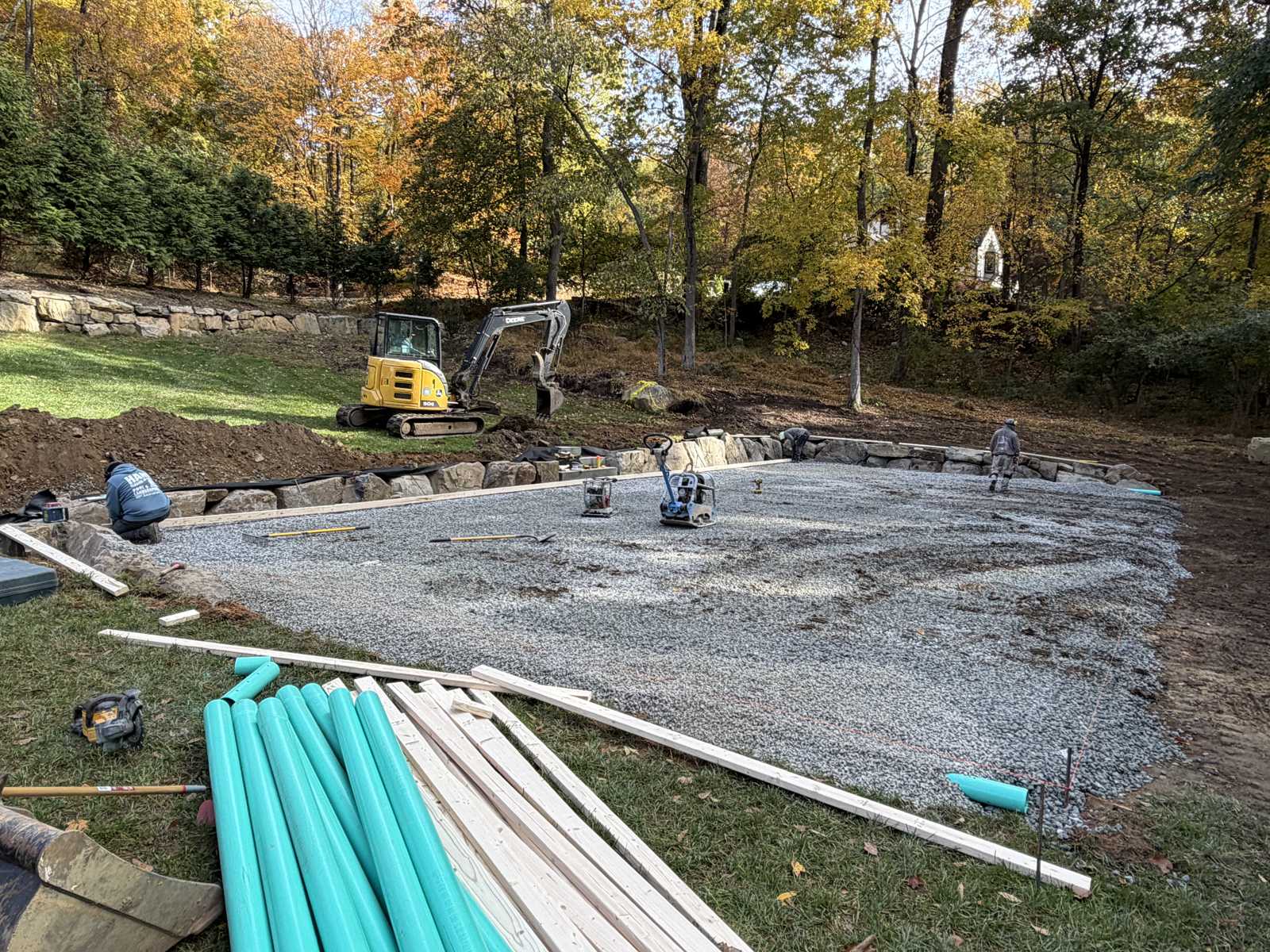
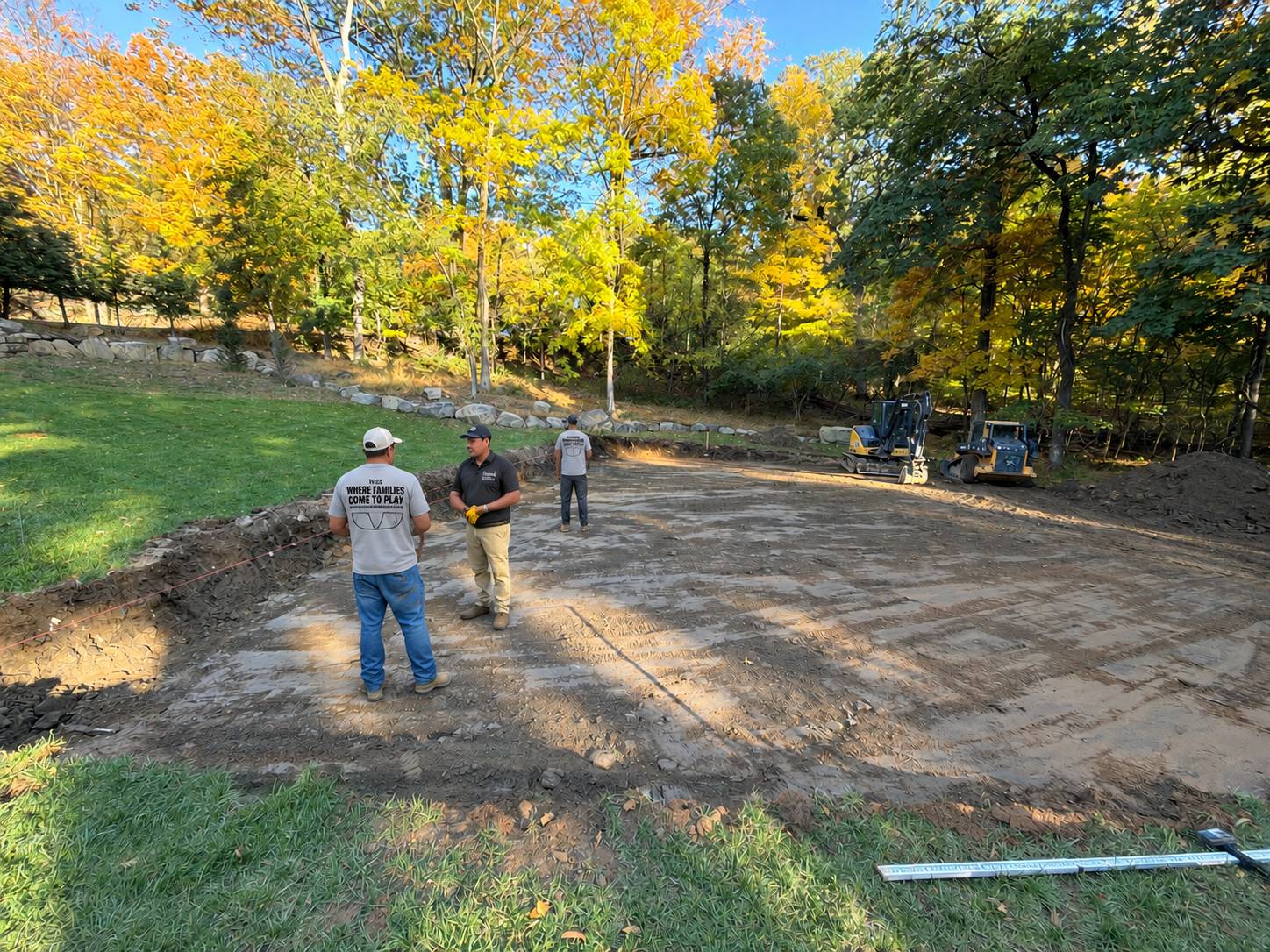
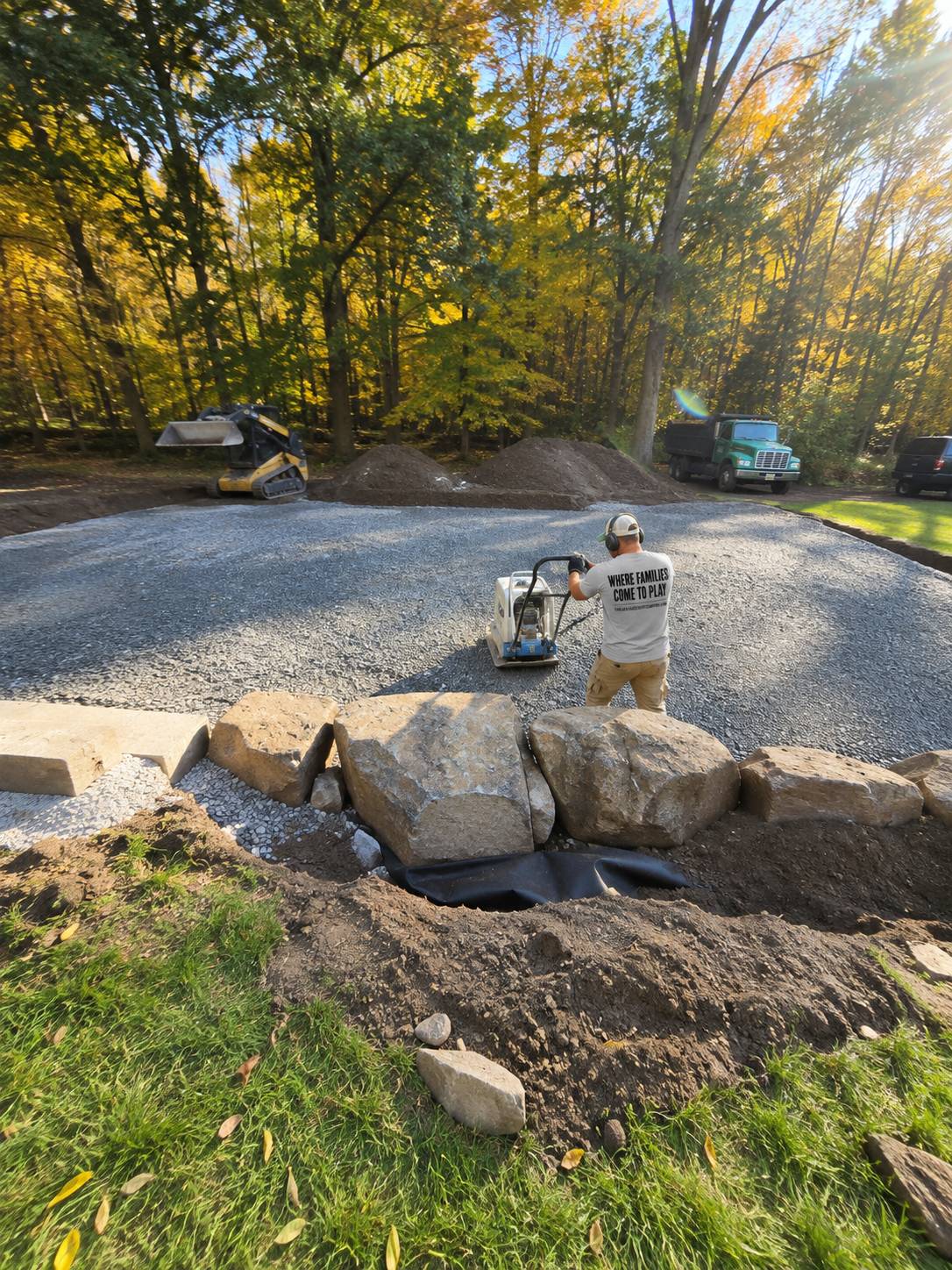
Existing TBCC project photos show site preparation and materials. Stacked pipe is shown before installation; it is not a diagram of a completed drainage system.
Yes. We review grading, the court base and the route water will take as part of court planning. The right solution depends on the property; not every court needs the same drain layout.
We assess pooling, runoff, erosion and soggy areas around existing courts and yards. Regrading, collection drains, stone drainage trenches or repairs to a suitable existing system may help, depending on the cause.
A French drain commonly uses a perforated pipe within a stone-filled trench to collect and move subsurface water. Suitable filter materials, slope, depth and a lawful discharge route must be considered for the site.
We identify a suitable discharge approach before proposing a drain. An existing drainage connection may be an option only if its condition, capacity and local rules allow it. We do not assume that a storm sewer, sanitary sewer, neighboring property or street is an acceptable outlet.
Grading can direct surface runoff away from the house and court where the property allows. We review elevations and surrounding areas so that redirecting water does not simply move the problem elsewhere. Foundation leaks or other building issues may need a specialist assessment.
A new playing surface is not a substitute for sound grading and base drainage. Water movement below and around the court still needs to be addressed. Significant settlement or base failure may call for reconstruction rather than a surface-only repair.
We assess elevations, access, soil conditions, the source of the water and available discharge options before preparing a project-specific proposal. The scope and schedule depend on those findings and any required approvals.