
 Authorized Dealer
A fresh start for a worn-out court. Our family-owned team rebuilds failed asphalt and concrete courts for New Jersey homeowners, HOAs and clubs—from removal and drainage improvements to a fresh reinforced concrete or fresh asphalt base, a new playing surface and crisp game lines.
A new coating cannot correct a failed foundation. When an old tennis, pickleball or basketball court has reached the point where surface repairs are not enough, reconstruction lets us address the ground beneath it, water movement and the court layout together.
We are a family-owned company, and we want the recommendation to fit your property—not just cover up the problem. We start by looking at what has failed and discussing how your family or community wants to use the new court.
Widespread or recurring cracks, uneven or sunken areas, heaving, loose or crumbling pavement, and persistent puddles can point to issues below the playing surface. An on-site assessment helps determine whether reconstruction is needed.
If the base is stable and drains properly, faded acrylic, worn lines and localized surface wear may not require a complete replacement. Explore court resurfacing and lining before deciding on a rebuild.
The scope is tailored to your site. Here is how a full reconstruction comes together.
Review the existing asphalt or concrete court, site access, drainage, desired sports and equipment. Confirm the layout, project scope and any required approvals.
Remove the failed court and unsuitable material as needed. Excavate to prepare for the planned drainage and new base.
Address water movement and shape the subgrade to support the court. Drainage improvements and regrading are planned around site conditions. Explore our court and yard drainage solutions.
Install and compact the stone base to create a stable foundation for the chosen pavement system.
Install a fresh reinforced concrete slab or fresh asphalt base, as specified for your site and surface. Allow the required preparation and curing before finishing.
Finish with acrylic over properly prepared concrete or asphalt, or a selected VersaCourt tile system, typically over concrete. Add game lines and the planned hoop, nets, fencing and lighting options.
Neither base is a one-size-fits-all answer. We review soil and drainage conditions, site access, intended use and the finish you want before recommending the build-up.
Acrylic court systems can be applied over properly prepared concrete or asphalt. VersaCourt tiles are typically installed over concrete; the selected system’s base and installation requirements guide the design. Colors and markings can suit tennis, pickleball, basketball or a compatible multi-sport layout.
Plan new hoops and net systems, fencing and LED court lighting alongside the rebuild. We coordinate those choices with the court dimensions, landscape and applicable requirements.
Real TBCC project photos showing site preparation, a concrete build and a finished court. These illustrate our work; they are not a before-and-after record of one reconstruction project.
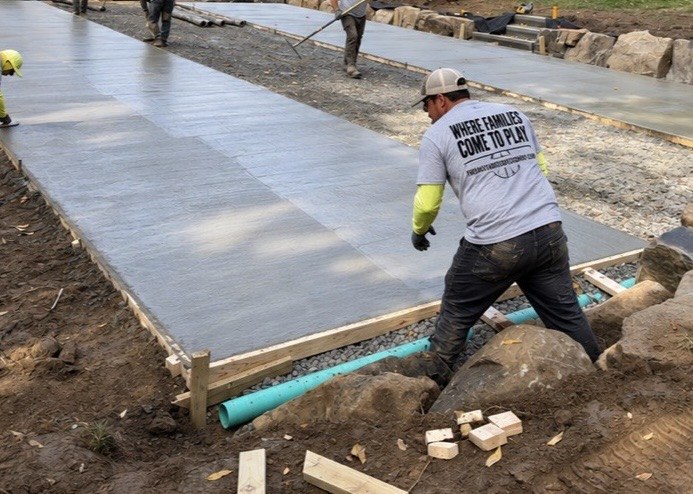
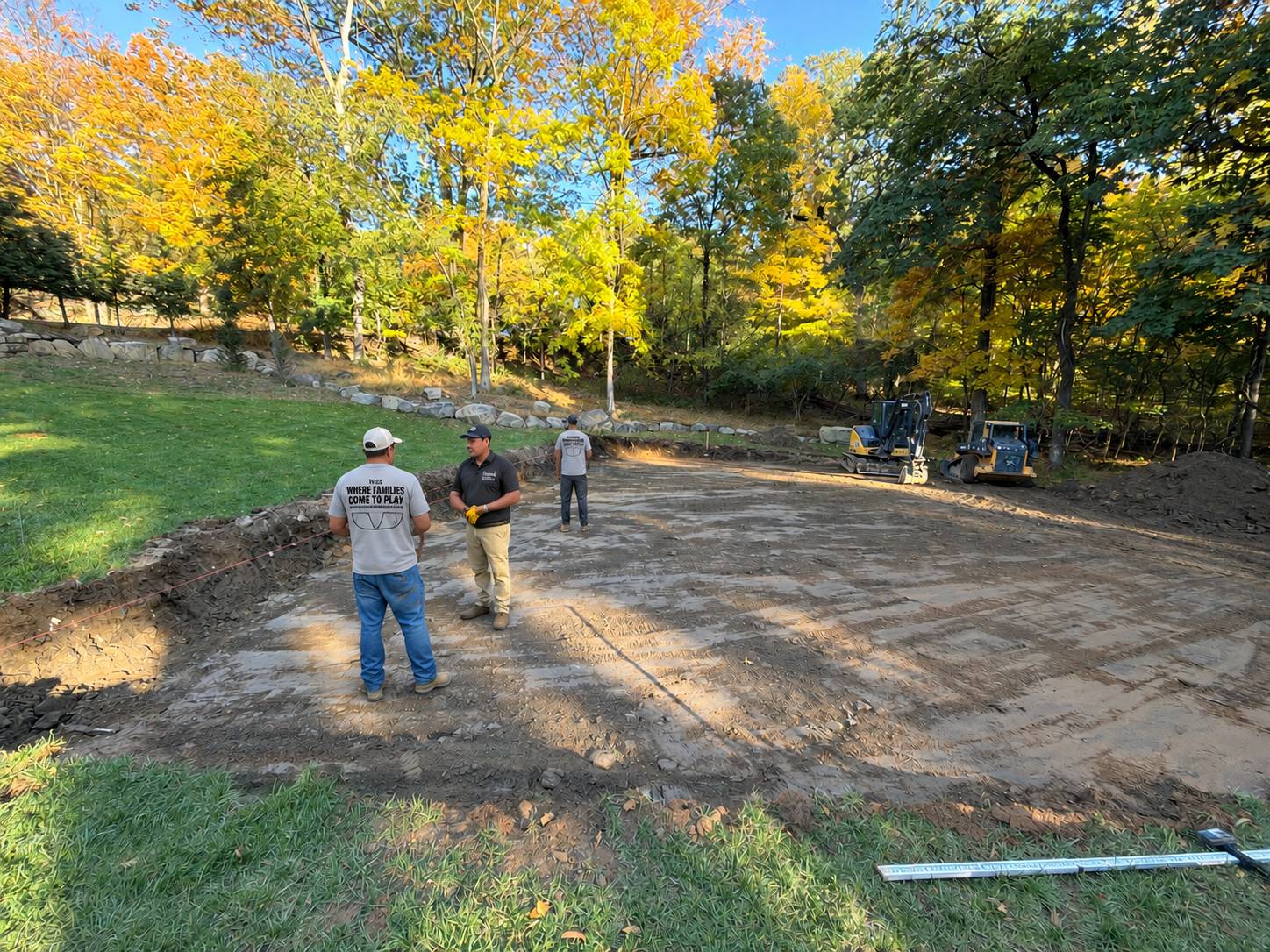
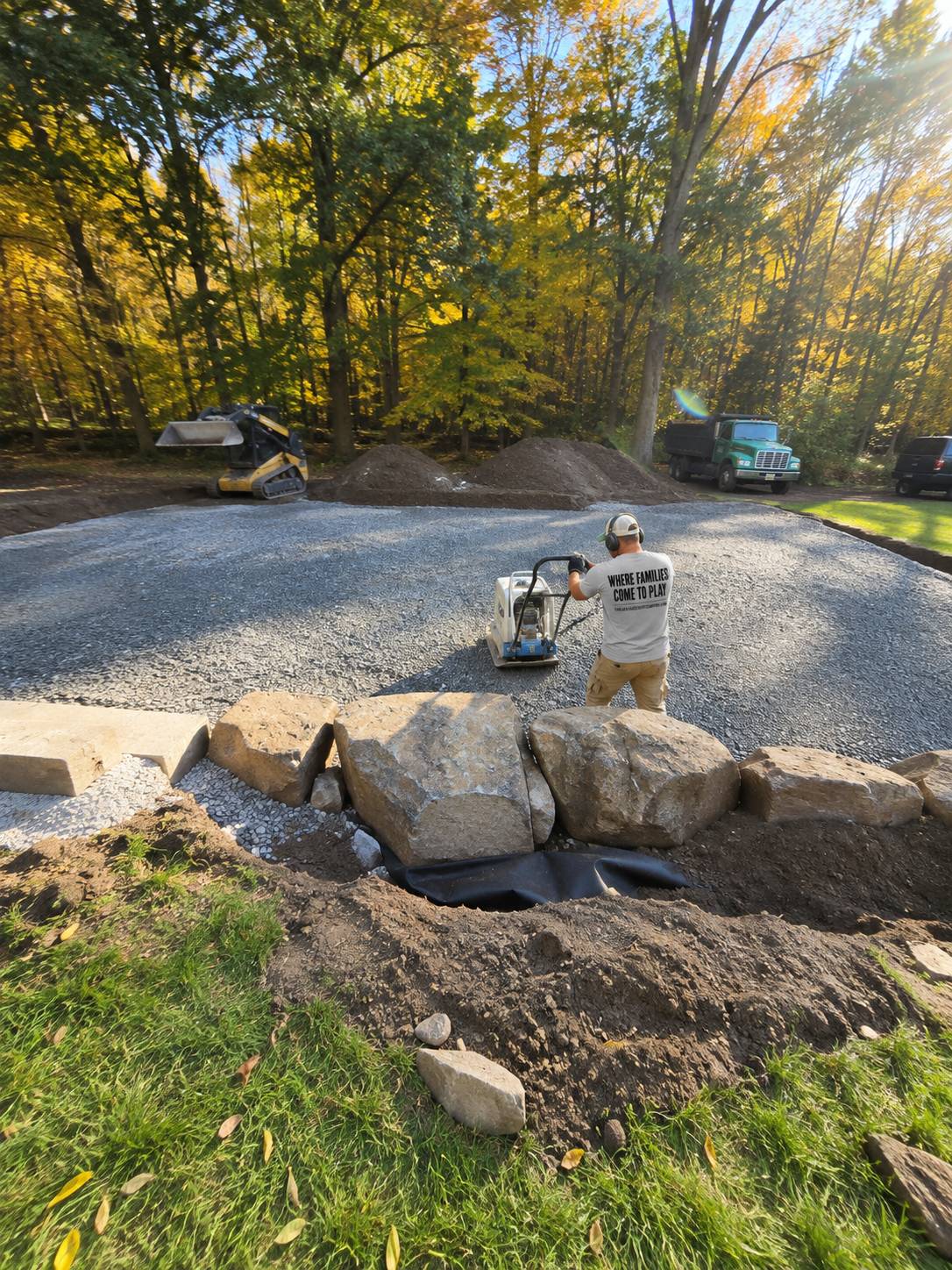
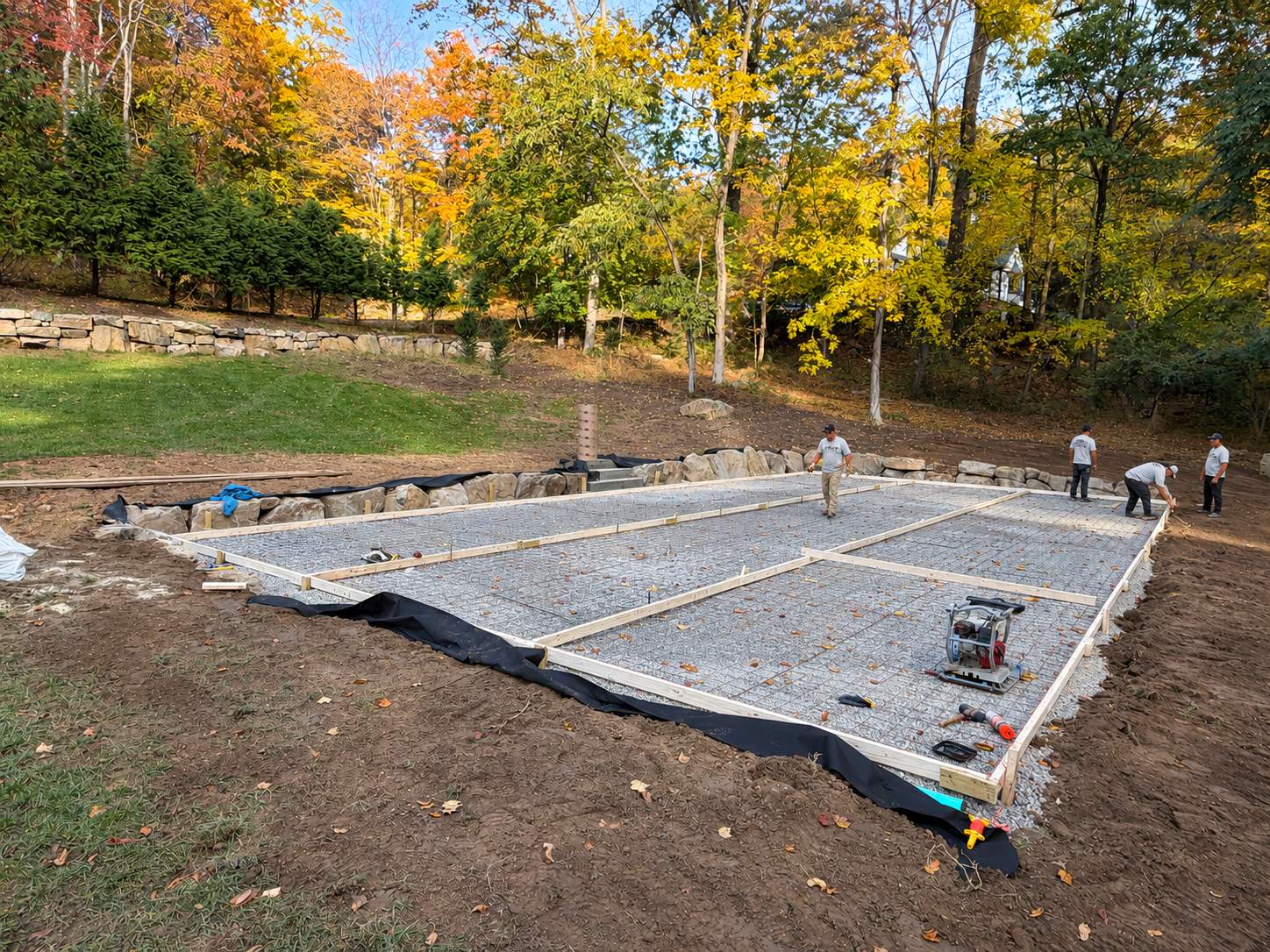
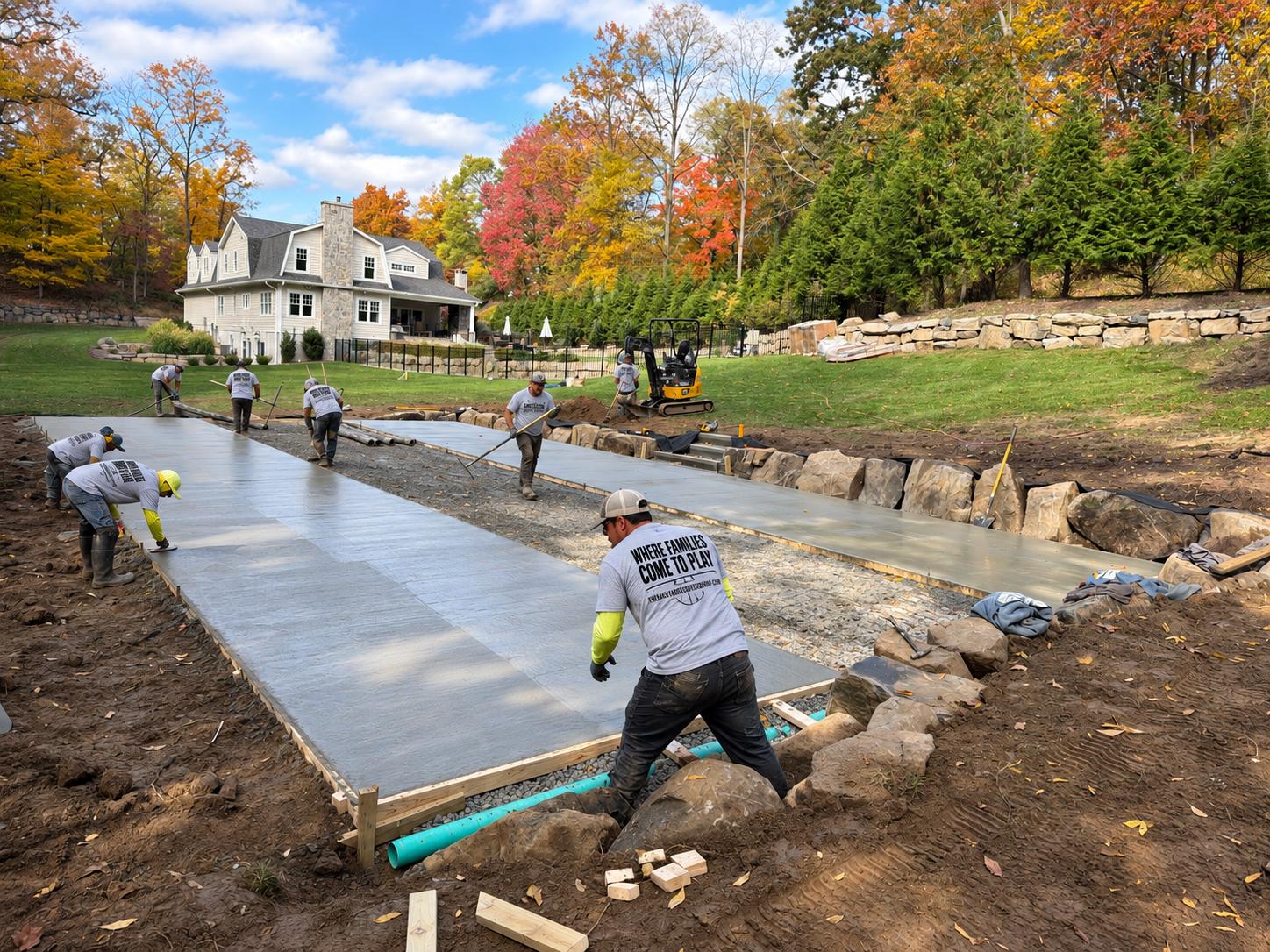
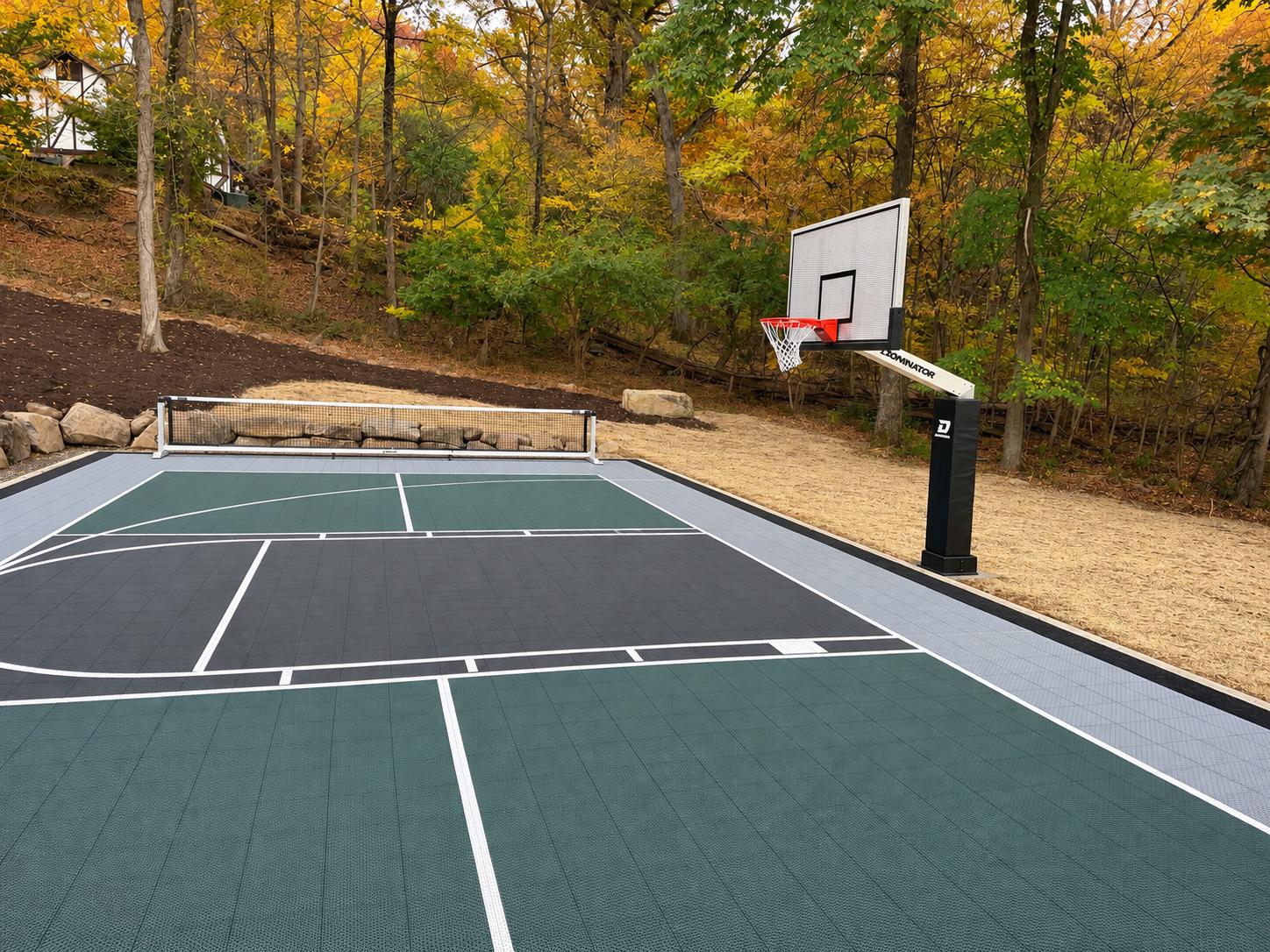
Faded color, worn lines and minor surface wear may be candidates for resurfacing when the base is sound. Widespread cracking, settling, heaving or recurring drainage problems call for a closer look at the structure. We assess the court before recommending repairs, resurfacing or a full rebuild.
Both fresh reinforced concrete and fresh asphalt can be suitable court bases. The right choice depends on ground conditions, drainage, access, intended play and the surface system you want. Acrylic can be applied over properly prepared concrete or asphalt. Modular tiles are typically installed over concrete; we confirm the base requirements for the selected tile system before construction.
We can plan a new tennis, pickleball, basketball or multi-sport layout as part of reconstruction. Available space, safety run-off, fencing, drainage and local requirements determine what fits.
Yes. We work with homeowners, HOA boards and clubs to define the scope, site access, court layout and finish options. We discuss approvals, scheduling and protection of surrounding areas before work begins.
The scope depends on demolition and disposal, access, drainage, grading, base choice, surface system and equipment. We provide a project-specific proposal after assessing the site. Weather, approvals and the preparation and curing requirements of the selected materials affect scheduling.
Hoops, nets, fencing and court lighting can be included in the reconstruction plan. We review placement, access, electrical needs and any applicable approvals before finalizing the scope.